
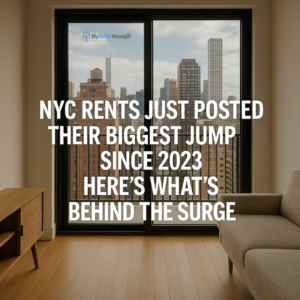
New York City’s rental market is heating up once again and this time, the numbers are hard to ignore. According to new data, Manhattan’s median rent has climbed to about $4,200, representing a 5% year-over-year jump, the steepest increase recorded since 2023.
While NYC is no stranger to pricey housing, this new surge adds fresh pressure on renters already grappling with rising everyday costs, inflation, and intense competition for apartments. So what exactly is driving this spike, and what does it mean for renters heading into 2025?
Let’s break it down.
What’s Fueling the Rent Spike?
1. Demand Is Outpacing Supply Again
Despite economic uncertainty, demand for NYC apartments remains incredibly strong. People are continuing to move back into the city, and newcomers are arriving for work, school, and lifestyle opportunities.
But available units? Still limited.
When more people chase fewer apartments, rents climb and fast.
2. A Post-Pandemic Market Rebound
NYC’s rental market has been on a roller-coaster ride since 2020. After pandemic-era discounts faded, rents stabilized for a short period. Now, with the city fully revived, office attendance rising, and tourism recovering, apartment demand is surging to pre-pandemic levels and beyond.
3. Rising Operating Costs for Landlords
Maintenance, insurance, utilities, and property taxes continue to increase. Many landlords adjust rent prices to offset these operational expenses. Combined with inflation across the board, higher rents are becoming the new norm.
4. Seasonal Pressures
The rental boom is also fueled by NYC’s seasonal patterns. Summer and fall are peak moving seasons, typically bringing higher prices but this year’s increase is extraordinary even by seasonal standards.
Who Is Feeling the Pressure?
This rising rent wave isn’t affecting everyone equally but most renters will feel it in one way or another.
Young professionals & new graduates
With Manhattan rents above $4,200, many entry-level workers are now priced out of the neighborhoods closest to major job hubs.
Students & interns
With universities back to full enrollment and companies returning to in-person roles, students and interns are competing hard for limited studio and 1-bedroom units.
Families
For families needing more space, the jump in 2- and 3-bedroom units could push many toward outer boroughs or nearby suburbs.
Long-term NYC renters
Even those with current leases aren’t safe future renewals could come with significant increases depending on building type and location.
Borough Breakdown: Manhattan Leads, but Others Follow
While Manhattan posted the most dramatic numbers, the upward trend isn’t limited to one borough:
-
Brooklyn continues to see strong demand for trendy and transit-friendly areas like Williamsburg, Brooklyn Heights, and DUMBO.
-
Queens remains a go-to for renters looking for more space, but prices in areas like Long Island City and Astoria continue to climb.
-
Even the Bronx and Staten Island have reported higher median rents, though still far below Manhattan’s levels.
This citywide pressure reinforces that affordability issues aren’t confined to Manhattan they’re now a broader metropolitan challenge.
What Does This Mean for 2025? Predictions & Possibilities
1. Affordability Will Remain a Major Crisis
Unless supply conditions improve, renters may face another year of tough choices: smaller spaces, different neighborhoods, or accepting higher rent-to-income ratios.
2. Increased Migration to Outer Boroughs & Suburbs
Areas like Jersey City, Hoboken, Yonkers, and parts of Queens may continue to absorb renters priced out of Manhattan and Brooklyn.
3. Policy Pressure Could Intensify
A jump of this scale often reignites conversations around:
-
Expanded rent regulation
-
Incentives for new housing construction
-
More aggressive affordable housing programs
Officials may face increased pressure to deliver solutions.
4. Potential Market Cool-Down in Late 2025
If new units come online or if economic conditions shift, the market could eventually level out but experts caution that substantial relief is unlikely in the short term.
Final Thoughts
New York’s rental market has always been dynamic, but today’s surge signals a deeper problem: housing supply simply isn’t keeping pace with demand. For renters, this means planning ahead, budgeting carefully, and possibly adjusting expectations about size, location, or amenities.
For markets across the country, NYC often acts as a bellwether and this sharp rise could foreshadow similar trends elsewhere.
As we move into 2025, one thing is clear: affordability will remain at the center of NYC’s housing conversation.
Source: https://www.yahoo.com/news/nyc-rents-post-biggest-jump-120000704.html